Electrical Page
|
|
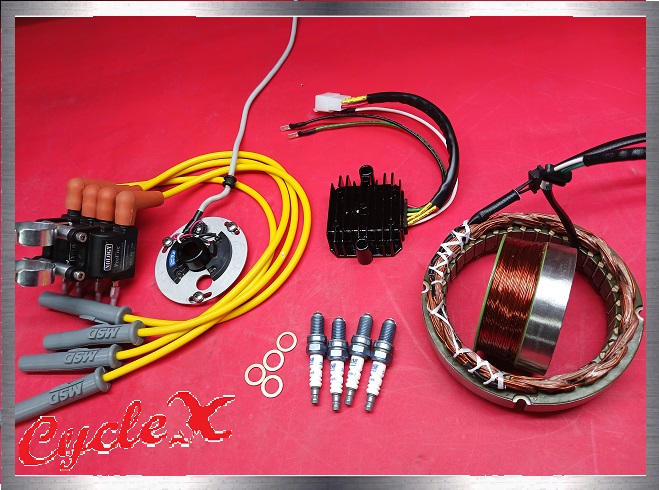
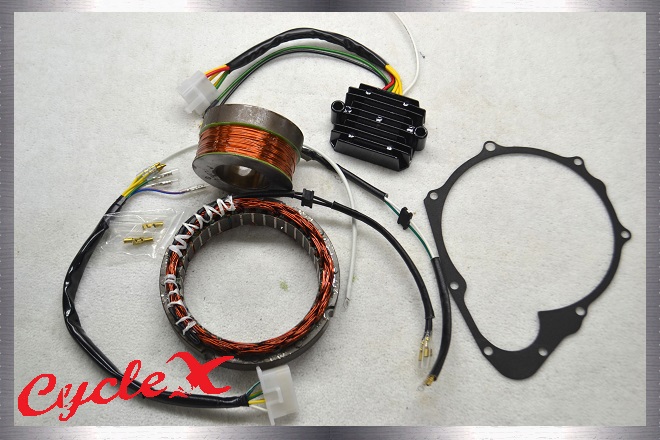
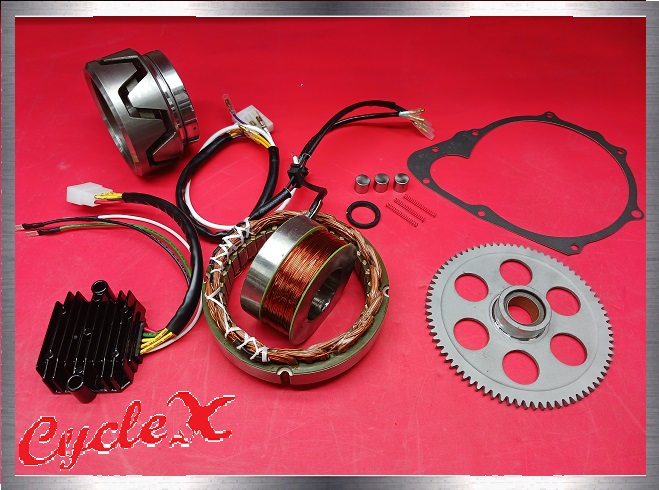
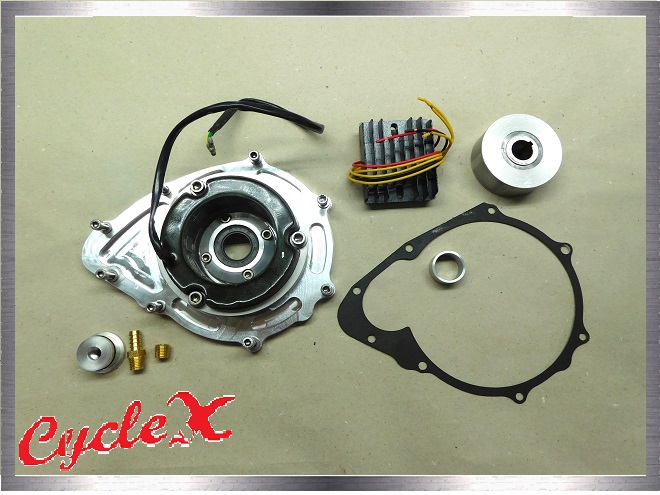
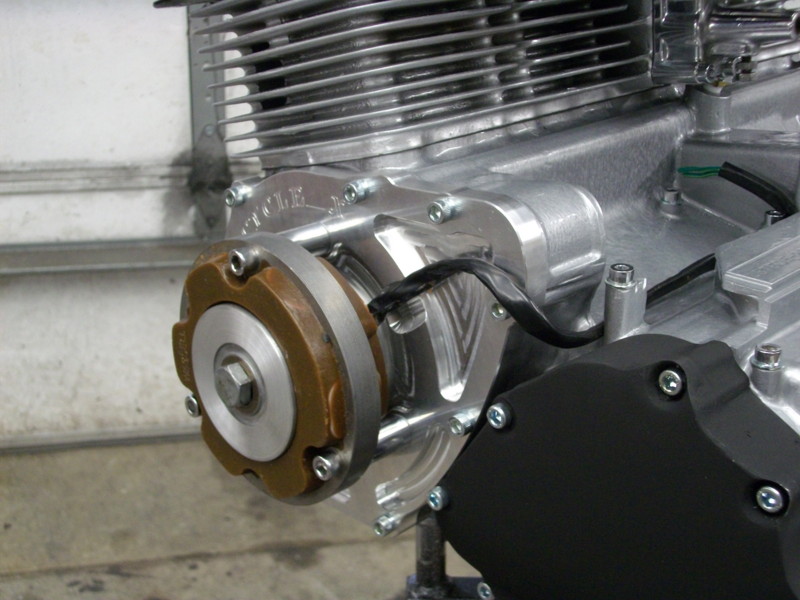
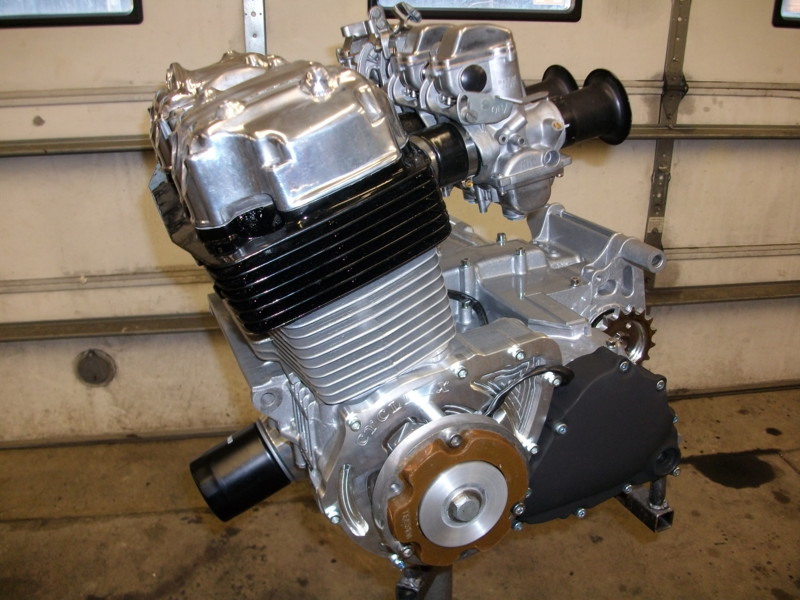
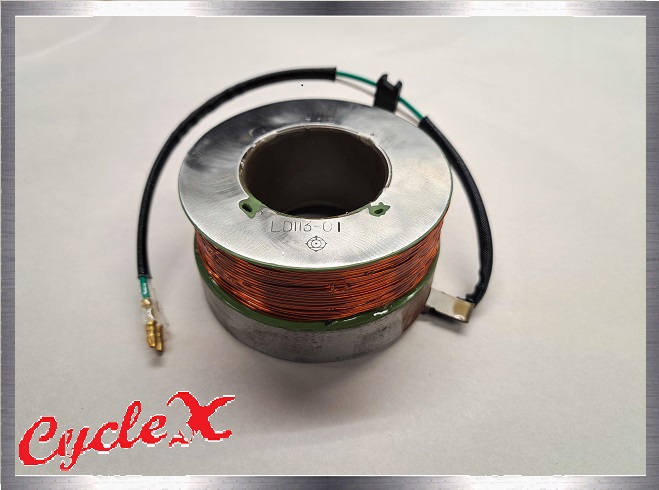
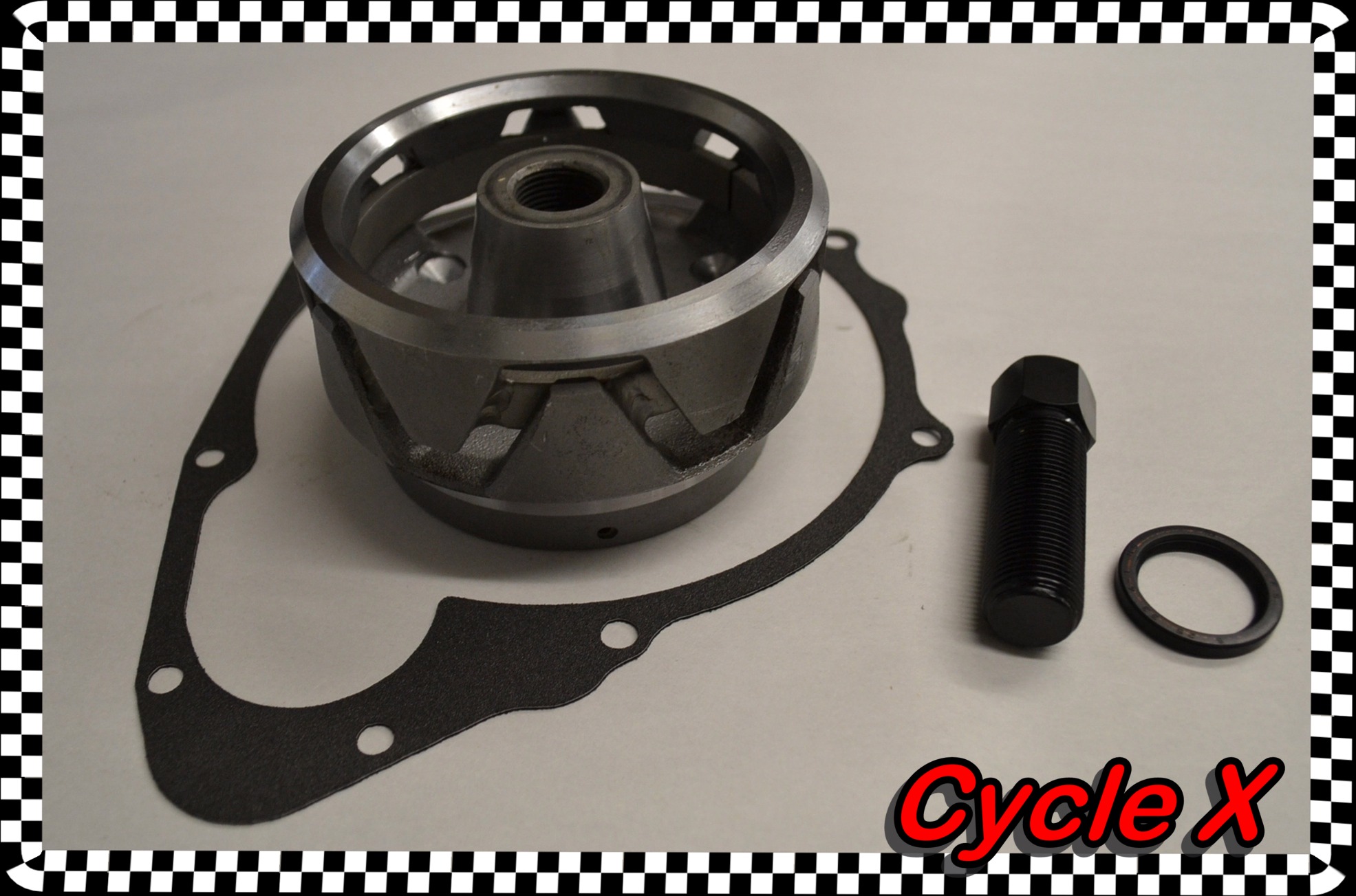
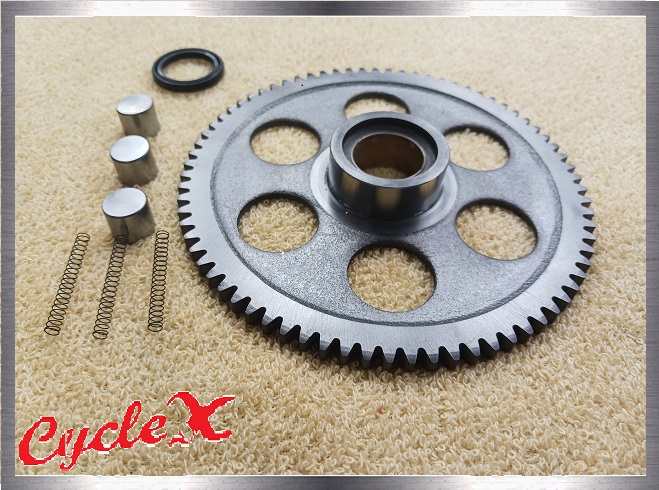
Cycle X Internal charging system
|
Voted:
Best electrical product in the past 100 years.....by - Benjamin Franklin!!
|
|
|
Please
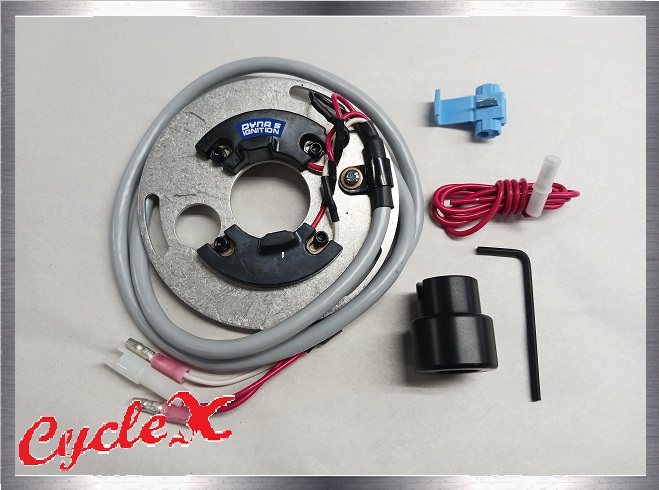
observe the above animation. Most electronic ignitions used to
date sense crank angle by using a Hall effect pickup, which is a
magnetic type sensor. This type of sensor is inherently unstable
& is effected by metal mass, motion, heat & distance
from pickup. In addition most ignitions only sense
position once per revolution. The control system must
estimate current engine speed based on the rotational velocity
of the previous revolution. Sudden acceleration or
deceleration will cause instability. This instability causes
internal vibration that can be observed by the movement seen on
the flywheel when using a timing light. The use of a magnetic
type sensor can cause timing to be off as much as ±7° giving
an overall deviation of 14° or more. With an optical sensor you
are breaking a light beam and light beams do not deviate! In
addition absolute positions are sensed at multiple key points on
the rotor, 90 times per revolution with the new IDS
system. The extreme stability optical systems offer allows
the engine to accelerate at a much greater speed, reduces engine
wear, allowing for smoother operation & transfer of power. |
| IGNITION
TIMING Understanding engine timing & its relation to load, compression and fuel delivery variables is important to performance. The new IDS ignitions have programmable sensor inputs which can be interfaced to a vacuum activated switch or a MAP sensor. The ignition timing can be set to any value based on sensor input status. The Power Arc CDR or SRČ also have a vacuum retard capability. If you have a large dresser (H-D), are under heavy load conditions, have increased engine compression, have a large bore engine or are using NOS please use sort of ignition retard system. |
| IGNITION
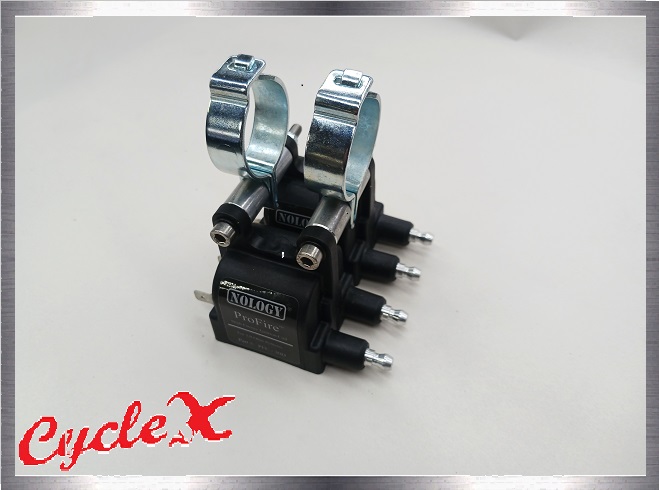
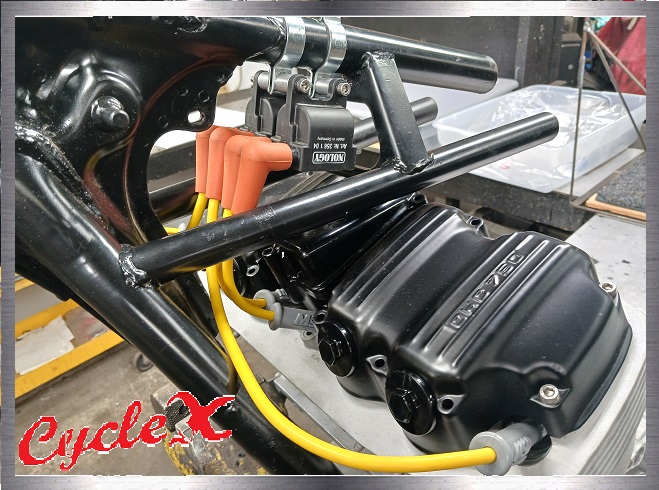
COILS Pick the right type of coil, do not use paper section coils only use section bobbin coils. Section bobbin coils allow for fast rise times and improved reliability. Power Arc only sells section bobbin coils. |
|
USE IGNITIONS WHICH ARE MULTI-SPARK During the intake cycle fuel is delivered via a carburetor or injection system and intake manifold into a combustion cylinder. Both of these delivery systems supply fuel to the cylinder in a droplet form, especially at lower rpm ranges. As the fuel is compressed turbulence in a circular fashion is created due to existing head designs. As the primary spark is discharged the concussion of the explosion combined with superheating of the combustion chamber turns the droplets of fuel into a hot vaporous gas. The flame front due to the rolling turbulence created by the heads moves away from the point of ignition to the face of the piston and to the outer cylinder walls. As the piston nears the top of the compression stroke any remaining unburned vaporous gas is circulated over the spark plug, and a fuel roll stall occurs. At this point a second spark is discharged obtaining a secondary burn of the fuel that in a single spark ignition system would be trapped in the upper portions of the head and during the expansion portion of the power stroke would be unburned and then be cycled out during the exhaust cycle as emissions. With the extreme stability of an optically triggered ignition system in a Multi-Spark mode a repeatable secondary explosion is possible. This allows for the ability to add more fuel without fouling the spark plugs and achieve higher torque/horsepower 1) The extreme stability of a optically triggered ignition system has the ability to allow the engine to accelerate as much as 30% quicker requiring greater fuel flow to the carburetor. This coupled with enlarged jetting of the carburetor or increased fuel to the injectors means you must maintain a sufficient supply line from the fuel tank to the delivery system by use of an enlarged petcock and supply line or a fuel pump. An example would be that at higher rpm's you may use all the gas in the float bowl of your carburetor and create a lean run situation damaging the engine if fuel supply is not maintained. 2) If you have a
sufficient fuel flow in a single spark mode you have enough to
operate in the Multi-Spark mode without engine damage because
you are burning residual fuel, even though your plugs may show a
lean burn. This will normally show an increase in fuel economy
(if driven in a similar fashion), horse power and a reduction of
emissions output. You could increase the fuel for more
horsepower but you should be careful not to over fuel, because
if the fuel is not burned by the secondary spark it is exhausted
as burning fuel through you exhaust system increasing heat and
reducing horsepower output because of an improper air/fuel
mixture. This also results in increased emissions output, which
is unnecessary. |
|
Use
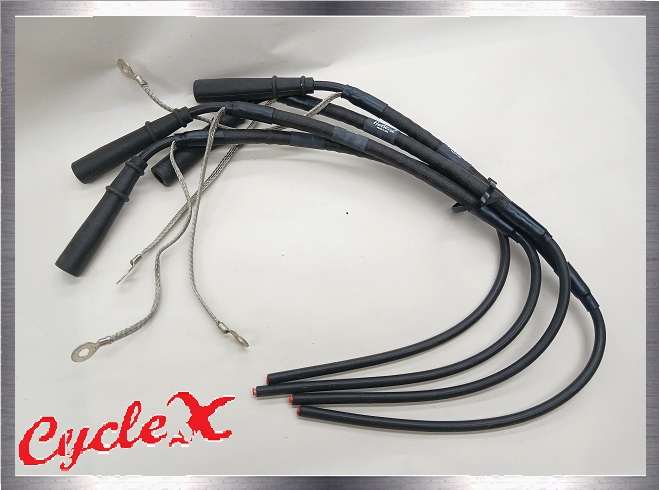
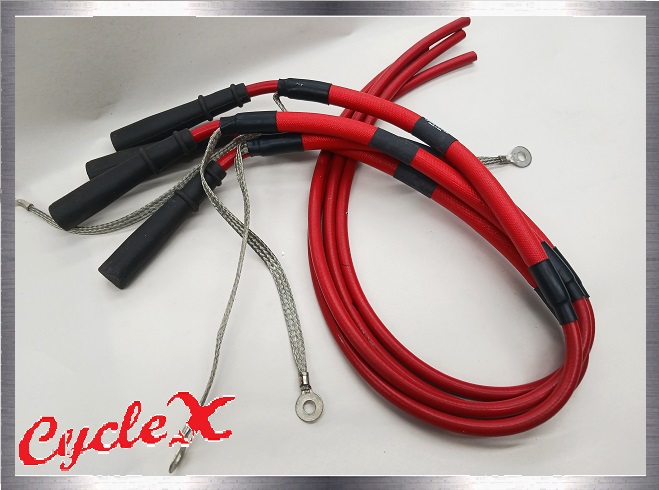
only resistor core spark plug wires with all Power Arc
Ignitions. See spark plug wire section below. Spark plug
gap should be made as small as possible, while still maintaining
performance. A wide spark plug gap can cause hard cold starting,
misfires during rich or lean fuel conditions, and reduction of
upper rpm range. To maintain a good secondary spark (multiple
spark) within a wider rpm range it is wise to run a narrower
spark plug gap. It is better to precisely place two stable,
consistent sparks than to fire one wider spark that may cause
misfires under various conditions. Many things effect spark plug gap settings Compression Ratio: The higher the engine compression, the more voltage required to fire the plug, and the narrower the plug gap should be. RPM: The higher the rpm's the less time the coil has to charge to break over voltage or complete saturation. A narrower spark plug gap will help high rpm stability. Spark plugs with
large side electrodes (ground straps) or spark plugs with split
side electrodes are not recommended, they interfere with the
flame front at the point of ignition.
In most cases, it is not until the engine is modified, or the compression is raised significantly, that stock ignition systems and spark plugs begin to show signs of being inadequate. At this point, a variety of factors determine which spark plug will be best suited for a particular configuration. In these modified engines, specific electrode/tip combinations, electrode materials and colder heat ranges can provide measurable gains in power. If your vehicle has had extensive modifications, it would be best to seek the advice of the manufacturer of your vehicle, the aftermarket supplier who manufactured your modifications, or your mechanic. Modifications that will typically not require specialized plugs (in most cases the factory installed plug will be more than adequate) include adding a free-flowing air filter, headers, mufflers and rear-end gears. Basically, any modification that does not alter the overall compression ratio will not usually necessitate changing plug types or heat ranges. Such minor modifications will not significantly increase the amount of heat in the combustion chamber, hence, a plug change is probably not warranted. However, when compression is raised, along with the added power comes added heat. Since spark plugs must remove heat and a modified engine makes more heat, the spark plug must remove more heat. A colder heat range spark plug must be selected and plug gaps should be reduced to ensure proper ignitability in this denser air/fuel mixture.
Q: Why should I use a resistor spark plugs & spark plug wires? A: "R" or resistor spark plugs use a 5k ohm ceramic resistor in the spark plug to suppress ignition noise generated during sparking. You must use resistor spark plugs & wires in any vehicle that uses electronic ignitions or on-board computer systems to monitor or control engine performance. This is because resistor spark plugs & wires reduce (EMI) electromagnetic interference with on-board electronics. They are also recommended on any vehicle that has other on-board electronic systems such as engine-management computers, two-way radios, GPS systems, or whenever recommended by the manufacturer. In fact, using a non-resistor plug or low resistance spiral wound spark plug wire in most applications may actually cause the engine to suffer undesirable side effects such as an erratic idle, high-rpm misfire, engine run-on, power drop off at certain rpm levels, abnormal combustion and probable damage to the ignition and/or ignition coil. Q: Why are there different heat ranges? A: It is a common misconception that spark plugs create heat. They don't. A heat range refers to how much heat a spark plug is capable of removing from the combustion chamber. Selecting a spark plug with the proper heat range will insure that the tip will maintain a temperature high enough to prevent fouling yet be cool enough to prevent pre-ignition. While there are many things that can cause pre-ignition, selecting a spark plug in the proper heat range will ensure that the spark plug itself is not a hot spot source.
|
|
SPARK
PLUG WIRES |
Stability
Most electronic ignitions used to date sense crank angle by using a Hall Effect pickup which is a magnetic type sensor. This type of sensor is affected by metal mass, motion, heat & distance from pickup. The Hall Effect sensor is less stable than optical sensors causing engine inefficiencies and wear, due to internal vibration caused by unstable firing of the spark plug. An example of this instability would be the movement seen of the TDC timing mark on the flywheel when using a timing light. The use of a magnetic type sensor cab be off as much as +-7 degrees giving an overall deviation of 14 degrees. With an optical sensor you are breaking a light beam and light beams do not deviate! In addition, this system has no timing calculations or cycle delay times effecting spark stability and placement because the system counts rotor slots to maintain an absolute relative crank angle position. This extreme stability allows the engine to accelerate at a much greater speed, reduces engine wear, allowing for smoother operation and transfer of power.
Multi-Spark Theory
During the intake cycle fuel is delivered via a carburetor or injection system through the intake manifold and into the combustion chamber supplying fuel to the chamber in droplet form. This is especially true at lower rpm ranges. As the fuel is compressed, circular turbulence is created due to existing head designs. The flame front generated by the fist spark leaves the point of ignition to the face of the piston and flows to the outer cylinder walls. As the piston advances in the compression stroke residual unburned vaporous gas, leading the flame front, is circulated over the spark plug. When the piston approaches TDC both static and expanding gas pressures increase and a fuel roll stall occurs. By precisely discharging a second and third spark, fuel trapped in the upper portions of the head and expelled during the exhaust cycle as emissions is consumed. In a single spark ignition system this fuel would have remained unburned. With the use of precision control and the advancement of new coil designs we have achieved the ability to produce high energy secondary and tertiary sparks that are required to ignite fuel that is under higher compression after the first spark. We believe that by consistent and precise placement of the primary, secondary, and tertiary sparks exhaust emissions can be reduced.
|
IGNITIONS--(maybe you knew
this, maybe not). |
|
Modify
Your Spark Plugs For Free Horsepower.
|
It is the sole and exclusive responsibility of the purchaser to determine the suitability of any part, product or work for his or her use. The purchaser shall assume all legal, personal injury risk and liability and all other obligations, duties and risks therewith.
Click to go Back to Honda 750 Index
Cycle X
US Hwy 51 South
Hazelhurst, WI
54531
Phone: 1-715-356-7346
Email: cyclex@cyclexchange.net